
I Maybe Sometime
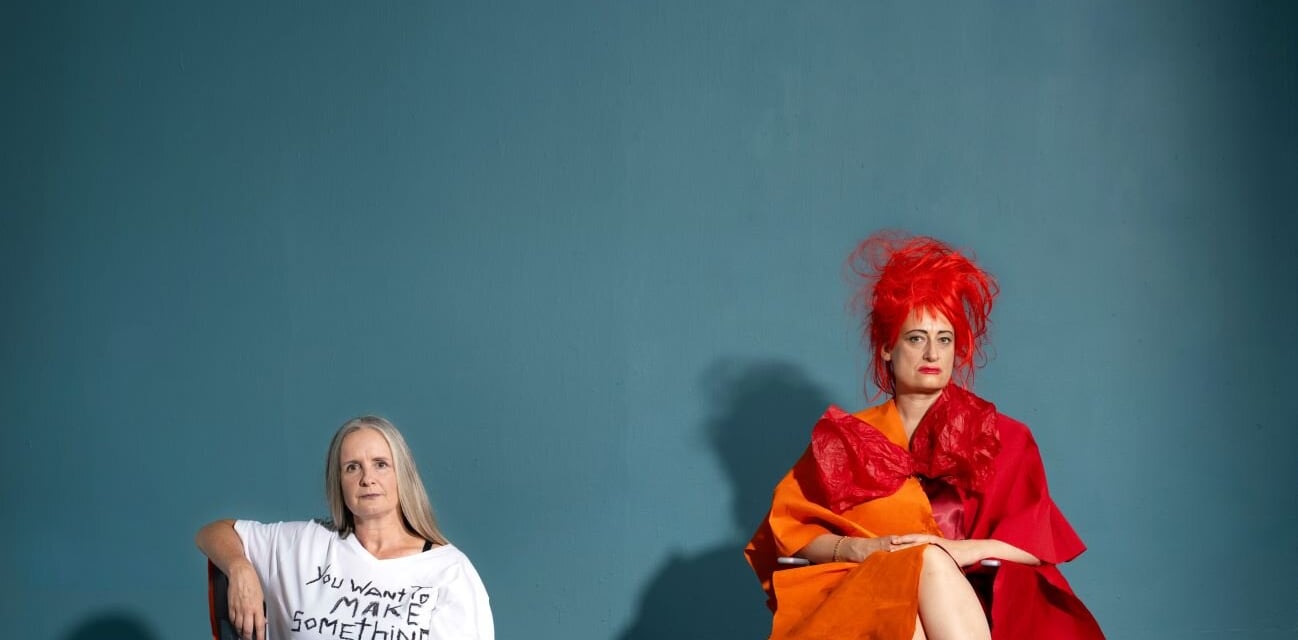
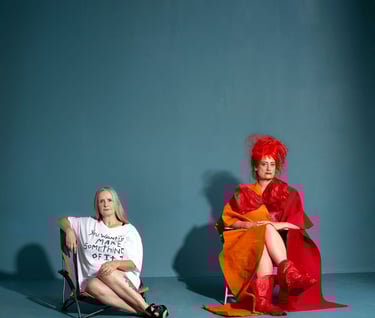
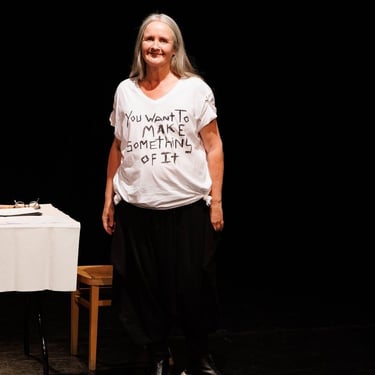
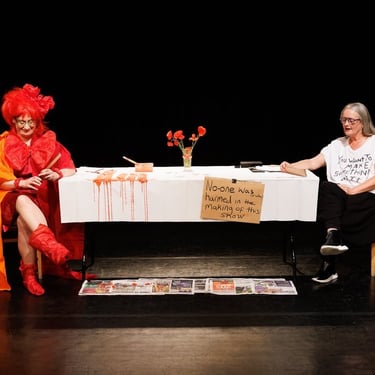
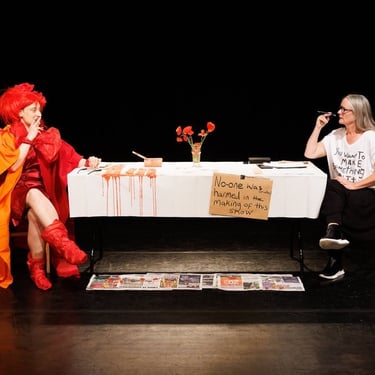
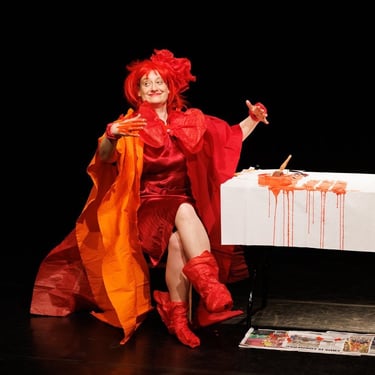
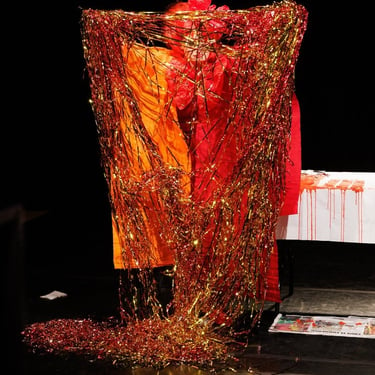
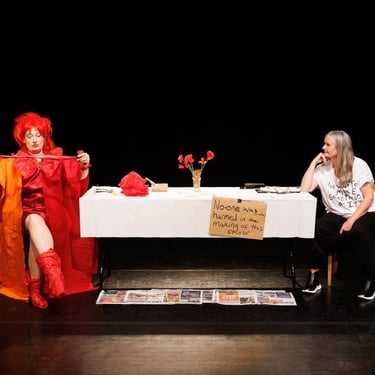
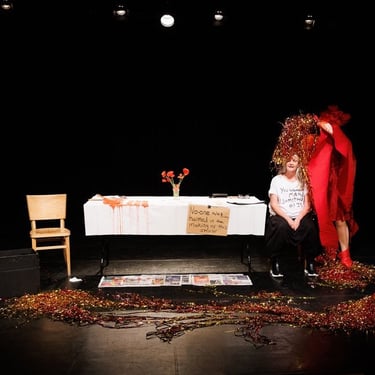
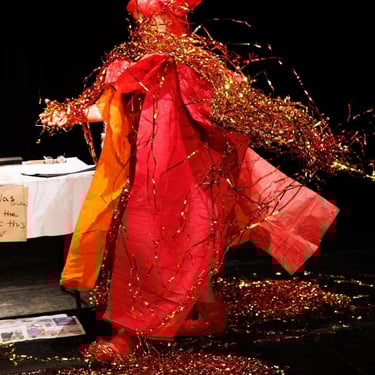
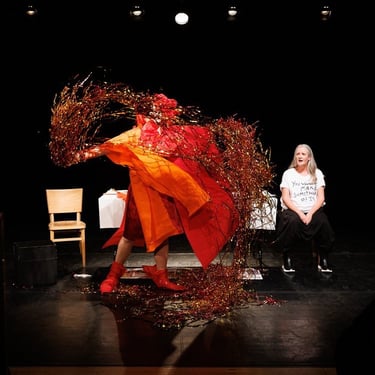
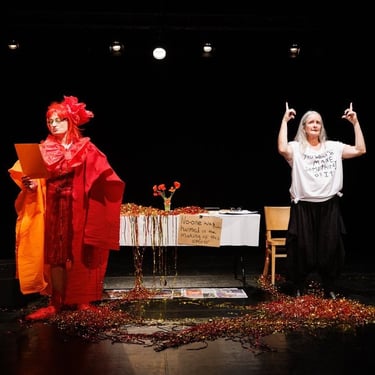
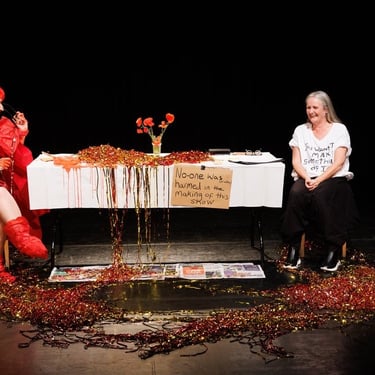
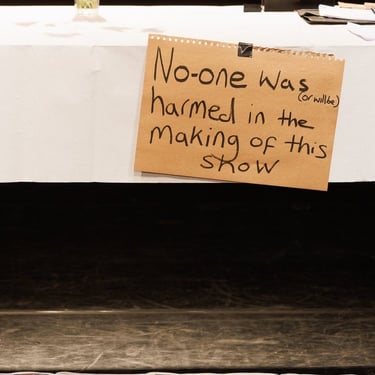
Below are early thoughts as I glimpse and glance this idea into being....
I am a working-class writer and theatre-maker from Brighton, England. When I say when walking through the streets ‘I used to live in that house’, I become spectre and spectator of then and now, of no longer and not yet.
Ann Quin was a working-class writer from Brighton, England. She was at the forefront of British experimentalism in the 1960s. She was born in died there too in 1973: swimming out to sea one morning by Brighton Pier never to return. Prior to her death in 1973, she published four novels: Berg (1964), Three (1966), Passages (1969) and Tripticks (1972)
I Used To Live in This House is about neglect and futures: my own, Ann Quin’s, and Brighton’s working- class heritage.
I think the piece maybe a walking tour...or maybe a performance in a house- an actual house, a digital twin or 3D model? – I don’t know. Maybe an audio- led performance experienced while audience bob or paddle in the sea.
Our team
Our strength lies in our individuality. Set up by Esther Bryce, the team strives to bring in the best talent in various fields, from architecture to interior design and sales.


Esther Bryce
Founder / Interior designer


Lianne Wilson
Broker


Jaden Smith
Architect


Jessica Kim
Photographer
REVIEW FROM EXEUNT, PULSE 2015: LOOKING, WATCHING, SIGNING
BY ALISTER LOWNIE AND KATHERINA RADEVA
9 JUNE 2015
KR: I watch Can I Start Again Please and barely take a breath. Of all the pieces we’ve seen this week, the tight choreography of every breath, every move of their paper, the cloth on the floor: I’m with them, from beginning to end. That piece is about interpretation, what we see and what we read, knowledge and visual information, what places the contexts around our world. That tight study of language and interpretation leaves me completely inspired.
AL: Yes. Language was the other major theme in my week, most of all in Sue MacLaine’s new Can I Start Again Please. Two women sit next to one another, a long scroll folded between them, its ends running across their laps. Beside and between them, piles of books, each topped by a bell. They wear matching dresses which pool on the floor in front, the colours of each inverted on the other. The scroll is their script, a written text which they will both render: Sue MacLaine offers fluent spoken English, and her gestures occasionally break into British Sign Language; her performance partner Nadia Nadarajah offers fluent BSL, and her breath occasionally breaks into the sounds of spoken language too. It is an intellectually stimulating piece, unashamed of its learning as it takes Wittgenstein as a starting point, but able to play wittily with its knowledge. There is anger and pain, a distress which it takes time to unpick: the pair play with speaking and not speaking, with how meaning is created, with context and its importance. They are working around something, avoiding dealing with it head-on. Outside their text lies something whereof they cannot speak – or should not, must not, are unable to. The something is a childhood trauma, an abuse which may be sexual, but the programme notes suggest is related to forcing speech on deaf children, and the way that teachers lay their hands on children to train their sounds. Almost throughout, the pair are unnervingly calm.
KR: A piece about meaning, translation, quotes, trauma, silence, quietness. A piece that just makes you feel human. It’s very calm when you take it in, nice and slowly, because they leave space for interpretation, how we interpret things (words, meanings). The script is there, like a scroll of knowledge. A beautiful piece of work.
REVIEW FROM THE STAGE, SICK! FESTIVAL 2015
BY BELLA TODD
27 MARCH 2015
Sue MacLaine’s Can I Start Again Please is an extraordinarily eloquent piece about silence and childhood sexual abuse, burning with anger, yet beautifully choreographed and powerfully controlled. MacLaine is a well-known BSL interpreter for theatre, and signed and spoken English sit side by side as she and Nadia Nadarajah test the limits of language. From the quoting of Wittgenstein (“Whereof one cannot speak...”) as a sort of throat-clearing exercise to the small bell ringing so frantically the clapper stuck in its throat, the layers of meaning are tightly packed. Watching the two women sign the difference between ‘repression’ and ‘dissociation’, you feel you are watching the mainstream emergence, at last, of a vital theatrical language.
REVIEW FROM DISABILITY ARTS ONLINE, SICK! FESTIVAL 2015
27 MARCH 2015
'Can I Start Again Please?' is a play about language and the capacity to comprehend and articulate traumatic experience. The work was commissioned to be part of the Sick! Festival in Brighton and Manchester. Review by Colin Hambrook
A bell sits behind reams of folded paper piled up on the floor between two pairs of feet.
Sue MacLaine's 'Can I Start Again Please?' features a bell and reams of folded paper
This year SICK! Festival has pushed the boundaries of reflective, difficult theatre-going to the darkest corners of human experience with an emphasis on performance exploring themes of abuse and suicide. From the packed audiences at all the shows in the festival it is clear there is an appetite for issue-based theatre that tackles taboos head-on.
Sue MacLaine’s two-hander Can I Start Again Please? is written, performed and staged with an incredible attention to detail. It’s as if the sculptural image for this performance were lifted straight from a Vermeer painting. Think ‘Girl With A Pearl Earring’ and you’ll have an instant iconic sense of the atmosphere conveyed through the set design and costume for what is essentially a static piece of theatre.
Sue MacLaine and Nadia Nadarajah are sisters presenting a precise and exacting duologue, written in English and BSL. Exploring communication; the play is about the myriad ways in which we understand each other, or not.
The writing unveils a persistent emphasis and reassurance gained by the use of repetition. “You will not be harmed this evening” we are told. What we are to experience is the aftermath of trauma, an intense 50 minute snow-dive into the impact of living with abuse perhaps half a decade after the act; the point at which ‘he’ was no longer a father.
Honed with great dignity and presence the story within the performance unravels slowly through inference rather than straightforward narrative. With slow deliberation MacLaine and Nadarajah take hold of their audience and shake us to the core as an underlying anger seeps through explanations of the differences between English and BSL. A dynamic theatrical language unfolds as we are shown explicitly the BSL for ‘repression’ and ‘dissociation.’
When MacLaine tells us apropos of nothing that “there is an unexpected item in the bagging area” we are confronted with layers of meaning that become all the more heightened with dramatic tension through the time taken to translate the idiom into BSL.
As audience we are taken on an internal journey through the authors’ struggle to survive and lift herself above the light into a life that contains a learnt language surrounded with shame, taboo and silence.
REVIEW FROM DISABILITY ARTS ONLINE, SICK! FESTIVAL 2015
27 MARCH 2015
'Can I Start Again Please?' is a play about language and the capacity to comprehend and articulate traumatic experience. The work was commissioned to be part of the Sick! Festival in Brighton and Manchester. Review by Colin Hambrook
A bell sits behind reams of folded paper piled up on the floor between two pairs of feet.
Sue MacLaine's 'Can I Start Again Please?' features a bell and reams of folded paper
This year SICK! Festival has pushed the boundaries of reflective, difficult theatre-going to the darkest corners of human experience with an emphasis on performance exploring themes of abuse and suicide. From the packed audiences at all the shows in the festival it is clear there is an appetite for issue-based theatre that tackles taboos head-on.
Sue MacLaine’s two-hander Can I Start Again Please? is written, performed and staged with an incredible attention to detail. It’s as if the sculptural image for this performance were lifted straight from a Vermeer painting. Think ‘Girl With A Pearl Earring’ and you’ll have an instant iconic sense of the atmosphere conveyed through the set design and costume for what is essentially a static piece of theatre.
Sue MacLaine and Nadia Nadarajah are sisters presenting a precise and exacting duologue, written in English and BSL. Exploring communication; the play is about the myriad ways in which we understand each other, or not.
The writing unveils a persistent emphasis and reassurance gained by the use of repetition. “You will not be harmed this evening” we are told. What we are to experience is the aftermath of trauma, an intense 50 minute snow-dive into the impact of living with abuse perhaps half a decade after the act; the point at which ‘he’ was no longer a father.
Honed with great dignity and presence the story within the performance unravels slowly through inference rather than straightforward narrative. With slow deliberation MacLaine and Nadarajah take hold of their audience and shake us to the core as an underlying anger seeps through explanations of the differences between English and BSL. A dynamic theatrical language unfolds as we are shown explicitly the BSL for ‘repression’ and ‘dissociation.’
When MacLaine tells us apropos of nothing that “there is an unexpected item in the bagging area” we are confronted with layers of meaning that become all the more heightened with dramatic tension through the time taken to translate the idiom into BSL.
As audience we are taken on an internal journey through the authors’ struggle to survive and lift herself above the light into a life that contains a learnt language surrounded with shame, taboo and silence.
Website: Mark Schofield
© Sue MacLaine 2026. All rights reserved.
Image credits:
I Maybe Sometime, The Untethered Joke & vessel - Hugo Glendinning
Can I Start Again Please and Still Life - Matthew Andrews
Sid and Valerie - JJ. Waller & Louise Gibson